Thursday, February 10, 2011

Learning from nature

Sometimes we humans think we are super smart. But compared with nature we have the creative powers of a gnat. Or maybe not, for all we know, gnats may be more creative and intelligent than we have ever noticed or imagined.

Consider the skyscraper.  Tens of stories tall inhabited by hundred or thousands of humans and our fellow travellers. Like cockroaches. Bedbugs. Or rats and mice.

A human invention? Nope.


The craggy river red gum which inhabits river valleys all over Australia must surely be one of the first skyscrapers (Image, Peter Halasz). On average, each tree houses 150 households, in convenient hollows where the wood has rotted. Each hollow is a high rise apartment for possums, birds, insects and other creatures. All courtesy of nature, designed so that what we think of as waste - rotten wood- is recycled for another purpose. The outputs from one life process become the inputs to another, the very same principles of natural capitalism that Amory Lovens, founder of the Rocky Mountains Institute applies to organizations, to achieve greater sustainability.


So here a workshop to explore this powerful natural principle:

1. Describe a system where waste outputs spoil our/your way of life.
2. Choose one of the systems and make a list of all the components and how resources e.g. water, gases, minerals, soil, paper, organic matter flow through the system. How does each component arrive, e.g. as raw materials, where does it flow to, and how does it leave e.g. as finished products in trucks,
3. Thinking about the total system, what components of the system are "waste" or "pollution" and how do we currenly deal with those components?
4. Consider each of the waste outputs, what could we do, so they are inputs to another system, and are re-used or re-purposed?
5. Thinking about what is left over, that can't be re-used, what other way is there to design our system, so this waste is not produced, or produced in a re-usable form, just like nature.
6. What other natural approaches could we ideally adopt, so that the waste can be reprocessed or reclaimed in more natural ways e.g. harvesting heavy metals in water or soil using plants that soak them up, using biomimicry to use H, C or O to peform the save role as more complex/dangerous elements.

Saturday, November 6, 2010

Seeing the world through other's eyes

There seem to be as many different ways of seeing the world as there are humans. The potential differences are mindbogglingly huge, an astounding Factorial 6500 million differences (about 10 multiplied by itself 10,000,000,000 times).

Each of us grows up with a unique set of influences that no other person on the planet - past present or future - will ever experience. And although this myriad of unique lenses could lead to ongoing disagreement, misunderstanding and lack of trust, there is equally the opportunity for considerable creative potential for good when we bridge and integrate our differences to create new theories, models, lifestyles, products or services.

There's over 6500 languages, with English currently displacing many others that have been around for thousands of years. We can grow up in the traditions of hundreds of religions including the Christian, Bhuddist, Hindu and Islamic faiths. We can stay within or surf to a new stage of human development, of which there are six, starting with the Hunter Gatherer and ending up with post-Knowledge Age (Wisdom Age or Wisdom Economy) ways of being in the world. Political views stretch from the anarchist, communist and socialist on the left to the conservative and fascist on the right.


Then there are career differences. We have White, Blue and now Green Collar work. We work for organizations that range from the academic, religious, business and community to local, state, federal and international  governments. Jobs are as diverse as soldier, lawyer, policeman, prostitute, airline pilot, fisherman, janitor, farmer, psychiatrist and teacher. Each has its' own unique language and concepts that may not be known to other disciplines....which can complicate communication beyond belief.

There's also a huge array of mental models with which to analyse and understand the world. MBA's frequently see the world through the lense of SWOT (Strengths, Weaknesses, Opportunities and Threats) or McKinsey's 7-S Model (Style, Structure, Systems, Staff, Strategy, Super-ordinate goals). Farmers think about Summer, Fall, Winter, Spring. Christians might view the world through the lense of the Ten Commandments, Thou Shalt Not Kill or Thou must not covet thy neighbour's ass. Some have a simplistic view of Right and Wrong. And electricians and plumbers have to be sure the power or water is On or Off before they start work.

So what if we could learn to see the world through other people's viewpoints, to live inside their mental models for a few minutes, or a days or a couple of weeks, a critical skill in the emerging Wisdom Economy. Here's a workshop to begin the process:

1. Beliefs: Brainstorm a list of 10 things you believe.
2. Labels: What's some labels you might use to describe the way you see the world e.g. Christian, Catholc, Bhuddist, Capitalist, Socialist, Accountant.You might be more than one....
3. Mental Models: Brainstorm a list of the 2-10 attributes you use to analyse the world around you....Here are some examples.....SWOT (Strengths, Weaknesses, Opportunities, Threats), The Seasons (Summer, Fall, Winter, Spring,
4. Mental Models: Describe a mental model you use to understand the world around you and how you use in your life. e.g. Right-Wrong.
5. Here's a problem...Use your mental model to make a decison about how to solve this problem...give your reasons, and as you do, explain how you mental model/lense helps you understand it better.
6. Now pick another mental model/lense different to yours, and analysis this new problem..., explain how you used the model/lense to arrive at your conclusions.
7. What did you learn from this experience? What did you learn about mental models/lenses?

Monday, August 16, 2010

The language in "things"

It might come as a surprise that all the physical tools and objects we humans use are actually "concretized language".

Things are nothing more than concepts or ideas in a physical form, the results of our actions in response to questions that explore how we might do something or what to do next. Or implemented action in the form of lists of things to do that reorganize nature.

In a very real sense, everything we find in nature is simply organized information. The fundamental forces of nature such as gravity and electromagnetism guide how matter is organized. DNA guides the way organisms are assembled from the raw materials of atoms. We have learned how to manipulate these information processing systems in extraordinary ways. It is what defines us as a species.

The Russian psychologist, A.N. Leont'ev shows that sequences of automatic motor actions - either speech or gesture - eventually become a tool we can use. First a psychological tool or method which is merely a list of steps and eventually the phsyical tool that automates the method. The neurophysiologist A.R. Luria called the neural programs for speech and gesture muscle actions "kinetic melodies". The two are often produced together.

Consider for a moment the software you use to write a story, paint a picture, send an email or reconcile your bank accounts. These seemingly "physical" tools are simply words written by the programmer to tell your computer what to do next. The language is translated from words into mathematical symbols, 0s and 1s that determine how electricity will flow through your computer to actuate switches.

Or consider the pathway from a physical action to a physical tool. The common cup grew out of the gesture of a cupped hand. Before that we drank just like other animals, mouth in the water. Here's how it works. Imagine you are one of your ancestors, the inventor of the cup:

1. Bend down and stick nose in water to drink like other animals.
2. You think: Too hard. But what if I.....
3. Cup hand. Scoop up water and bring to mouth.
4. You think: Much easier. But what if I...
5. Find container like a cup that scoops up water.
6. You think: Very easy. But what if I...want to re-use it
7. Make list of steps to make cup. Make cup.


Conretized language takes many forms. The instructions that drive your computer software to display a character or a word, or print the words and symbols on a page are language. The sculpture that is left after you chisel away the surplus stone to reveal hidden inside the physical representation of an idea is language. Skyscrapers, jumbo jets and electrical power are just the re-organization of our nearby universe using instructions - our most powerfully organized words and concepts, in the most amazing order, made with electro mechanical devices such as metal cutting machines whose internal computer programs control the angle, depth, shape and speed of cutting or polishing or electroplating. There's even a new kind of printer that can print familiar objects such as appliance or car parts, one layer of atoms at a time, assembled in the same way as the printed word. All language.

Language of sorts has been with us a long time. It's not just humans that communicate. It's prairie dogs who warn others about danger, or bees that return to the hive with clear instructions where to find the best pollen, or proteins that help DNA do it's job of creating a new cell. Or light that communicates with matter in a way that re-organizes them both.

When we start to think of language this way it becomes much easier to see the universe as an amazingly rich conversation between the past and the future that has been going on for billions of years. And we are just one small part of this amazing story.

So here's some questions to explore this idea:

1. Give examples of the following different kinds of language: utterances, symbols, signs, conversations, concepts, questions, theories, statements, stories, poetry, lists, plans, methods, narratives, advertising slogans, newsapaper headlines.
2. What kind of extra powers do these forms of language give humans? Choose one and describe it's powers.
3. When humans invented the written word, what did this allow us to do, we could not do before? What did we have to do before? And before that?
4. What is the connection between human action/activity and language/gesture?
5. Imagine you are one of the first humans to speak. What do you imagine you spoke about. What kinds of words, signs, symbols or gesture did you use?
6. Thinking about an object in everyday use in our world, trace the language/gestural function of the tool back to its origins e.g. cup, cupped hand, drinking from water in a river or stream.
7. Make a list of all the parts of a jumbo jet or a motor car. Imagine and describe the journey from the past to the present for each of these parts.

Saturday, July 3, 2010

Playing with pataphors

What do infatuation, obsessive compulsive disorder, theories of mind, teamwork, string theory, Rube Goldberg and Heath Robinson machines have in common?

They are pataphors, high level abstractions, "wild" assumptions built on "wild" assumptions. It's the "science of imaginary solutions that rests on "the truth of contradictions and exceptions".

Pataphors are like the Second Life of the mind. Much of what is incoherent or impossible in the real world can suddenly be obvious and simple in these worlds of the wildest imagination.


Pataphors can help us solve wicked, unsolvable problems. They are metaphors on steroids. Like when a character in a story invents herself. Koinonia, the Mary Poppins of Imaginary Friends, is a pataphorical creation. She is one of the main characters in a wild romp I'm writing with colleague Abby Straus.

Pataphysics began life as "nonsensical" philosophy invented in 1893 by French writer Alfred Jarry to poke fun at physics and metaphysics, to parody the modern scientific method and all its theories.

physics > metaphysics > pataphysics

Just as metaphors lend new meaning to other words and help us explore new conceptual landscapes, pataphors help us create imagined worlds built upon the foundations or assumptions of the metaphor. 

Take metaphorical landscapes as an example. Imagine for a moment that a world exists in which words have the characteristics of mountains. Rivers. Hillocks. Deserts. Forests. Jungles.

Jungle "word worlds" might be inabited by tropical concepts like succulent mango, or sabre-tooth tiger, or verdant vines so you might "enjoy sex like a succulent mango" or feel so constantly threatened you have "a sabre-tooth tiger of a day" or go "swinging through life like Tarzan, leaping from tree to tree with the aid of a "vine pendulum", to mix metaphors.

Pataphysics is, in essense, a degree of separation from reality. If we see someone we know on the street and believe they are ignoring us (even if it is not true), and then begin to imagine a reason for them doing so, we are essentially thinking pataphorically.

An example of a real-life pataphor is String Theory. Physicists have created this theoretical  explanation of how the universe works on the flimsy foundation of "speculative" mathematical theories of general relativity and quantum mechnanics. String Theory is more in the realm of fantasy than science. What gets me is how the quantum mechanics maths only works when you apply a technique called "renormalization" that eliminates the inconvenient x/0 terms. Which is crazy, since any number divided by zero is infinity. And one of the truths of general relativity is that nothing can travel faster than the speed of light. David Bohm's spin experiments say otherwise. And the superliminal effects of the Casimir effect and quantum tunneling show light travelling faster than it should. String theory is not in fact physics, but pataphysics.

When teenagers become infatuated with another, they use the tiniest cues or scraps of conversation to build a belief that the other is just as in love with them as they are with the object of their affection. I thought he looked at me (assumption 1), which means he thinks I am attractive (assumption 2)  and wants to sleep with me (assumption 3) and get married (assumption 4).

I know of a woman who was the mistress of the reputation killer pataphor. She began with the speculation "I wonder if Jack is having an affair?" Girlfriend One would reply, equally speculatively "I guess he could be having an affair". Turning to Girlfriend Two my reputation killer tells her "Girlfriend One said in all probability he is having an affair". The next time the story is told, the inconvenient words "in all probability" are left out and the story becomes "Jack is having an affair".  So out of almost nothing, a 'skyhook' or 'bootstrap' forms  and soon there is absolutely no doubt that I'm a cad, a bounder, a low life...and heading for the divorce court.

Pataphors can be our worst fears or cherished dreams run amok. They are whole worlds we create out of wild and wonderful assumption heaped upon wild "assumption assumptions". They are the creatures of a mind that borders on the schizophrenic, because according to the latest brain research from the Karolina Institute, the dopamine systems of the super-creative are similar to those of the victims of the condition we regard as a psychosis. We enjoy the same kinds of good feelings.

The ingenious contraptions invented by Goldberg and Robinson also defy normal physics. Wonderfully exotic and outrageous functions are combined into a complex "machine system" which covers up/brushes over the fatal flaws in logic.

The circular human chair is a physical equivalent of a pataphor. Each person sits on the knee of the person behind them to form a circle. Remove one of the humans in the circular chain and the whole structure falls over.

Here's a workshop to explore pataphorical thinking:

1. Brainstorm some metaphors and apply them to an everyday concept e.g. wolf woman, rocket man, diamond bullet, cave brain, corporate fool.
2. So starting with your metaphor, describe what it could be e.g. a cave brain is empty, dark inside, with a few skeletons, and the ashes of a long dead-fire.
3. Now in your cave brain world, describe how the "elements" you have included in your description come to life, e.g. the skeletons in his cave brain rattled around, looking for a fire to ignite his neurons, but all they could find were ashes.
4. Think of a time when you were madly in love with another person, but they took absolutely no notice of you. Describe how you imagined life would be like with them, and how even the slightest hint of a smile gave you hope.
5. Brainstorm a list of other kinds of "things" that "exist" that are pataphorical e.g. Second Life businesses, science fiction worlds, imaginary numbers i.e. square root of -1.
6. Thinking about the theory of mind concept and how you might imagine what another person might be thinking about what you are saying and doing. Invent two characters and how they think about each other this way. What do they do and say in your imagination?
7. What is your worst fear. Now, take that worst fear and explore at least five worst case scenarios that could happen as a consequence, and then a consequence of that, and then a consequence of that.
8. What is your most cherished dream? Starting with a cherished dream (that does not yet exist) explore at least five wonderful outcomes that could happen as a consequence, and then a consequence of that, and then a consequence of that.

Artist: Allan Lam, Rube Goldberg type machine from Dreams, Memes & Themes software, Zing Technologies, 2002.

Monday, May 24, 2010

Terse verse

Over the past two weeks I have been playing a constrained writing game called Terse Verse with colleague, co-creator and friend Abby Straus from Pittsburgh. We wanted to see what would happen when we collectively wrote poetry constrained by simple rules.

Click on the image to start the animated gif to see how the verse unfolded. 


"Serendipity sucks" unfurled like a beautiful flower, danced from concept to concept, through twists and turns of meaning, springing surprises, posing challenges.  The process engaged our own personal Googles - our right frontal lobes - which searched in unlikely nooks and crannies of our brains for new and richer possibilities.

Although we each had some control, it felt as if the poem developed a life of it's own.

Activity: Terse Verse works like this. On your turn add two words. You can only change words you have written. Punctuation can be added or removed at any time.

Sunday, May 23, 2010

An "impossible" feat of self-organization

In his new book, Complex Adaptive Leadership, Nick Obolensky shows how a group can successfully complete a very complex task in just a few minutes, if everyone follows some very simple rules of interaction.

It's a powerful example of how to lead or manage in an increasingly complex and rapidly changing world.  And offers an alternative to the traditional approaches to the division of labour, co-ordination and managerial control which are often failing us, as the world becomes more complex, uncertain and ambiguous.


I first played this game with Carrie Lobman at the Eastside Institute in New York. It's an Improv game from the book Carrie and Matt Lundquist wrote called Unscripted Learning that helps teachers use improvisation  in the school classroom to help young people learn "playfully".

They use the game to teach kids about triangles....isosceles triangles. Two of the three sides are the same length.

It's an activity for 5-80 people and can be played in a room, but preferably in a space with clear boundaries such as a tennis or basketball court.


Each person selects two people at random and must stay an equal distance from both, for the remainder of the game.

Acording to Nick Obolensky, the group settles into a steady-state pattern in about 1.25 minuutes per 20 people. So if there are 60 people in the group it will take three minutes for everyone to stop moving around.

It's the same kind of simple rule that helps bird flock and fish to shoal without crashing into each other. They maintain the same distance from each other, and as they change direction make tiny adjustments to maintain the rule.

So here's a workshop to explore this emergent phenomenon:

1. Undertake the "simple rules of interaction" experiment for yourselves. Then report back, how did it feel?.
2. Given the range of possible solutions and the number of people involved, how complex was this task and what makes the task complex? Describe what would have happened if one person had been in charge.
3. The group quickly achieved a task that some think impossible or would have taken a long time to complete. What helped the participants perform the task?
4. Explain how each of the following enablers helped you achieve the task. * Clear individual objective * Few simple rules * Continuous feedback * Discretion and freedom of action * Skill/will of participants
5. What are the consequences for traditional models of organization leadership and managership in rapidly changing and more complex times?
6. Describe how you could could get complexity to work for you (rather than against you) for all different kinds of organization problems/issues?
7. Brainstorm a list of outcomes you want e.g. trust each other implicitly, and then describe a "rule of interaction" for each outcome, that could improve your relations or coordination with others?
8. Where might you discover really good examples of rules of interaction?
9. What operating principles have your discovered today about operating in emergent, chaotic situations?

Tuesday, May 18, 2010

A process of transformational political change

Influencing Governments has never been more difficult and fleeting. Just when you think they are convinced of your arguments, along comes a political opponent with many supporters in their cavalcade and upsets your applecart, your business plans and your life.

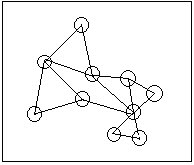
This old way of doing business was simple. You go straight to the political leader and ask for special treatment, as shown in the picture on the left. This approach may have had a big short-term effect, but it's unlikely to be sustainable in the long-term.

In a past life I was a political consultant. Not the kind that knocked on doors, and lobbied politicians. But one that created coaltions of common interests among people and organizations who would normally have little to do with each other, or be uncomfortable working for the same cause.

The coalition buildiing approach is based on one of the fundamental laws of complex adaptive systems, when parts of the system connect to other parts. New order emerges seemingly in a quantum leap. The system shifts from one stable energetic state to a new stable state at a more energetic level. Typical of these phase transitions in human system is the transformation of a group into a team. Or the despatch of an old technology by a new technological ecology. Or a bunch of loosely connected ideas that resolve into a  breakthrough decision, theory or concept.

Phase transitions are also a feature of the activity of large social and political systems.


Think of a political system as widely dispersed citizens and their organizations, closely connected Government department and agencies near the centre of power. The Heads of these government organizations serve the current political leaders. In the US it's the Secretary, in the UK and Australia, the Minister. Many of these agencies and their political leaders are in competition with each other, think environment vs mining, so we should not make the mistake of thinking of "the government" as a unified player in the game.

The picture on the right shows how we used to build coalitions of common interests, by progressively connecting up the whole system, which would then shift, autocatalytically, to a new more organized stable state. A kind of Wisdom of Crowds effect, the kind of activity we can expect to see more often in the emerging Wisdom Age, or its' economic equivalent., the Wisdom Economy.

This approach worked by collectively creating/discovering an idea that better served the interests of all of the parties than the narrower goals each previously pursued. Or a new collective ideal which helped people with diverse interests avoid an outcome that all would be unhappy if it happened

The solutions were never cut and dried. Or known in advance. The clients often had to dramatically alter their wish list along the way. Many of the ideas that emerged from engaging the many stakeholders, were often better than the compromises the client had already grown assumed. More often than not, the client had been backed into a corner and was resigned to their fate.

We would start with a client and their needs. Like prosper and live a happy life. We would take note of the problem, like the decision which might dramatically increase their costs, beyond what was sustainable and restrict what they could do. They often faced choices which had adverse impacts on their employees, contractors, suppliers, neighbors, communities and even their competitors. Often all their efforts to negotiate a political settlement had failed and there seemed to be nowhere else to go.

So we would talk to all the stakeholders - everyone who had an interest - and ask what they thought was the issue, and the best solution possible. As we worked our way around the stakeholder network, many of whom had limited contact with the client, we would discover new ways of thinking about the issue, and feed back these ideas and perspectives to the client and to the other stakeholders.

And very soon a new idea would start to emerge, around which all the stakeholders could unite, despite their differences, which would become the "big idea". And we would create tentative pictures/maps/designs and benefit analysis which gave it substance.

We would start at the periphery and work our way towards the centre, acquiring supporters as we went. We would constantly make adjustments to the "big idea" so that we continued to enroll more people and their organizations. We deliberately stayed away from politicians and their public servants who were often locked in resonance with the old "problem maker" and were often not prepared to change their minds until the winds of political change almost blew them away.

When we reached the central political stakeholders we held back, to give the laggards time to comprehend the practicalities of the new political order. If people are strongly committed to a course of action, they need time to mourn the past, and adapt/adjust to the new. Shoving it in their face merely reinforces their determination to stick to their guns, even in the face of reality.

Most wicked problems have solutions. They are only wicked problems because the principal stakeholders have opinions, values, or interests from which they are unprepared to budge. The Middle East conflict between the Isralis and the Palestinians could easily be resolved if both were to adopt less zealous positions. The debate over abortion could be easily resolved if those who oppose it were to accept that it is unfair and unreasonable for their point of view to be imposed on others who do not share their views. The climate change battle has been hard fought because some see themselves as losers. But when we realize that by sticking our heads in the mud, we are all likely to be losers, attitudes change.

We did not have the Zing team meeting system back in those days, but if we had, these are some of the kinds of questions we would have asked:

1. Thinking about the problem/decision [describe it], what impact will it have on you and your organization/community/family?
2. Who else is there in the community which may be affected negatively by problems/decisions and what do you think they might prefer to happen and why?
3. Who do you think is in favour of the decision or will benefit from it and why do you think they are supporting it?
4. If you had complete comtrol/authority, what would you do differently and why would you want to do this?
5. What ideas might other stakeholders have that could be incorporated into a better solution?
6. What ideas could we include in the final solution to serve the interests of those who support the new solution/decision?
7.  How will we ensure what we really want, happens?